Towing Guides
Towing vs. roadside assistance: Which service do you need?
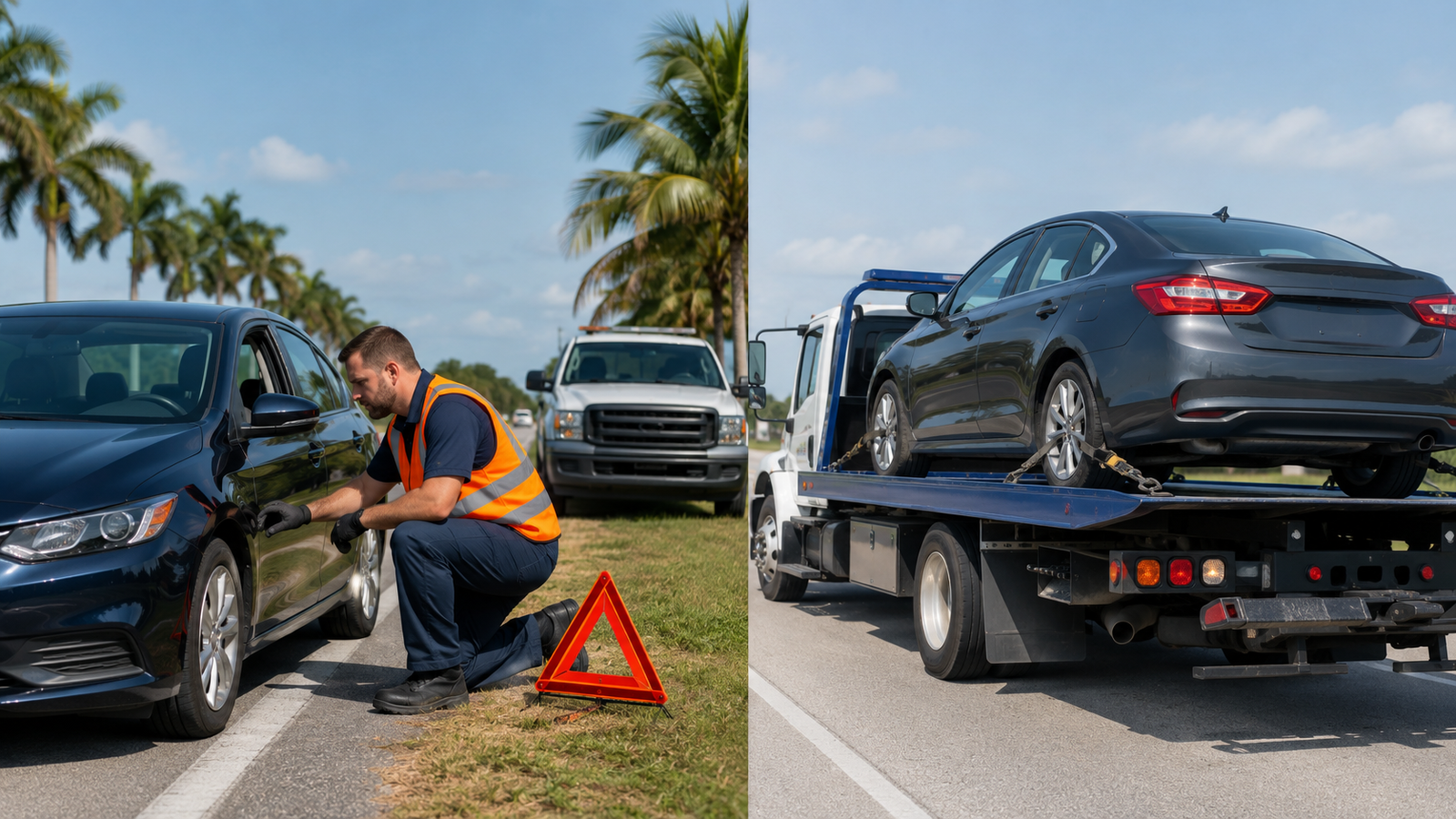
Roadside assistance may help with certain problems at your location. Towing transports your vehicle when it cannot or should not be driven.
When your vehicle stops working, the first question is not always “Who should tow it?” Sometimes the immediate problem may be handled where the vehicle is located. In other situations, the vehicle may need to be transported.
This guide offers general information, not a mechanical diagnosis. The appropriate response depends on the vehicle, its condition, the location, access, manufacturer requirements, available equipment, and an independent provider’s assessment.
- Roadside assistance may address an eligible problem at the vehicle’s location.
- Towing moves the vehicle to another location when transportation is needed or when the vehicle should not continue under its own power.
Safety and official instructions come first
AFCtow is not an emergency-response service. Call 911 when there is an immediate threat to life or another emergency. Follow instructions from police, fire, transportation, property, and roadway authorities.
Florida law includes requirements for drivers approaching certain stopped wreckers and disabled vehicles. Review the current Florida Move Over guidance rather than relying on a summary when making driving decisions.
There is no single instruction about remaining inside or exiting a vehicle that is correct for every roadside situation. Traffic, fire, collision damage, weather, visibility, roadway design, and official directions can change what is safest. Do not attempt a repair or roadside task that you are not trained, equipped, and safely positioned to perform.
When roadside assistance may fit the situation
AFCtow’s service preview shows Battery Jump, Tire Change, Lockout, and Fuel Delivery as roadside-assistance request categories.
These are request categories, not promises that a particular service can be performed. A provider may need more information about the vehicle, the immediate problem, the location, and access before determining whether it has the appropriate capability.
Battery Jump
A Battery Jump request may fit when a starting problem appears battery-related and the vehicle is otherwise in a location where an eligible provider can assess it. A no-start condition can have causes other than the battery, so selecting this category does not diagnose the vehicle or guarantee that a jump will resolve the problem.
Tire Change
A Tire Change request may fit when a tire-related problem can potentially be handled safely at the location and the vehicle has the necessary compatible equipment or replacement tire. Wheel damage, multiple damaged tires, unsafe positioning, missing equipment, or other vehicle conditions may make towing or another response more appropriate.
Lockout
A Lockout request may fit when access to a vehicle is needed and an eligible provider can lawfully assist. Vehicle design, proof of authority, location, and available equipment may affect what assistance is possible. This guide does not provide entry or bypass instructions.
Fuel Delivery
A Fuel Delivery request may fit when a vehicle is out of fuel and an eligible provider can safely and lawfully supply the appropriate fuel. Availability, quantity, vehicle requirements, location, and provider capability may vary.
Does roadside assistance include towing?
Some roadside-assistance plans include towing, but the benefit depends on the specific membership, insurance policy, or service terms. Check whether towing is included, the covered distance or destination, service-call limits, and charges beyond those limits. Confirm your benefits with your plan provider before arranging service.
When towing may be the better request
Florida’s statutory definitions describe a disabled motor vehicle as one that is not operable under its own power or is unsafe for highway operation, and describe towing as pulling, drawing, or carrying a motor vehicle for transport. Those definitions provide useful Florida context, but they do not replace a vehicle-specific assessment.
A Tow request may be appropriate when:
Review Florida Statutes §320.01
- the vehicle needs transportation to a repair facility or another destination;
- the immediate problem cannot be addressed at the location;
- the vehicle cannot move under its own power;
- the vehicle has collision, wheel, tire, steering, suspension, or other conditions that may make continued driving unsafe;
- the location or access prevents a roadside service from being performed safely;
- manufacturer requirements call for a particular transport method.
This list is not a drivability test. Do not use it to decide that a damaged or malfunctioning vehicle is safe to drive.
A quick service-selection checklist
Before choosing a request category, consider:
- Is this an emergency? Call 911 for immediate threats to life or other emergencies.
- Has an authority given instructions? Follow police, fire, transportation, property, or roadway directions.
- Does the vehicle need transportation? If so, Tow may be the appropriate starting category.
- Could the immediate problem potentially be addressed at the location? Battery Jump, Tire Change, Lockout, or Fuel Delivery may be reasonable request categories when eligible.
- Is the location safely accessible? Traffic, parking structures, private property, clearance, surface conditions, and vehicle position may affect provider access.
- Do you have the necessary information? Gather the vehicle’s year, make, model, type, color, condition, exact pickup location, access notes, and intended destination when requesting a tow.
An independent provider may determine that a different service or equipment is required after reviewing the facts.
How AFCtow handles a service request
AFCtow is a pre-launch technology marketplace being prepared to connect customers with independent towing and roadside-assistance providers. AFCtow is not the towing company or motor carrier performing an accepted service.
After launch, the planned booking process will ask customers to:
- select an available service;
- provide vehicle, contact, and pickup information;
- provide a destination for a Tow request;
- request a quote;
- review the request and required terms;
- authorize payment before submitting the request for an available provider to review.
Selecting a category does not guarantee a quote, provider acceptance, availability, arrival time, capability, outcome, or price. The independent provider performing an accepted service is responsible for assessing the job and its equipment requirements.
Related AFCtow resources
Preview non-emergency roadside help
Explore the information AFCtow plans to collect when requesting roadside help. Live service requests are not yet available.
Preview the AFCtow request process